Stamford, CT
Foundation Crack Repair
Foundation crack repair seals cracks in poured-concrete basement walls so water can't enter. In Stamford, CT — where freeze-thaw cycles and hydrostatic pressure are common and older housing stock carries decades of settlement — even hairline cracks can leak during heavy rain. We assess the crack, determine whether it is a non-structural leaking crack or one that needs an engineer's review, and seal it from the inside with polyurethane or epoxy injection — stopping the leak without excavating outside.
203-779-6579 Serving Stamford, CT
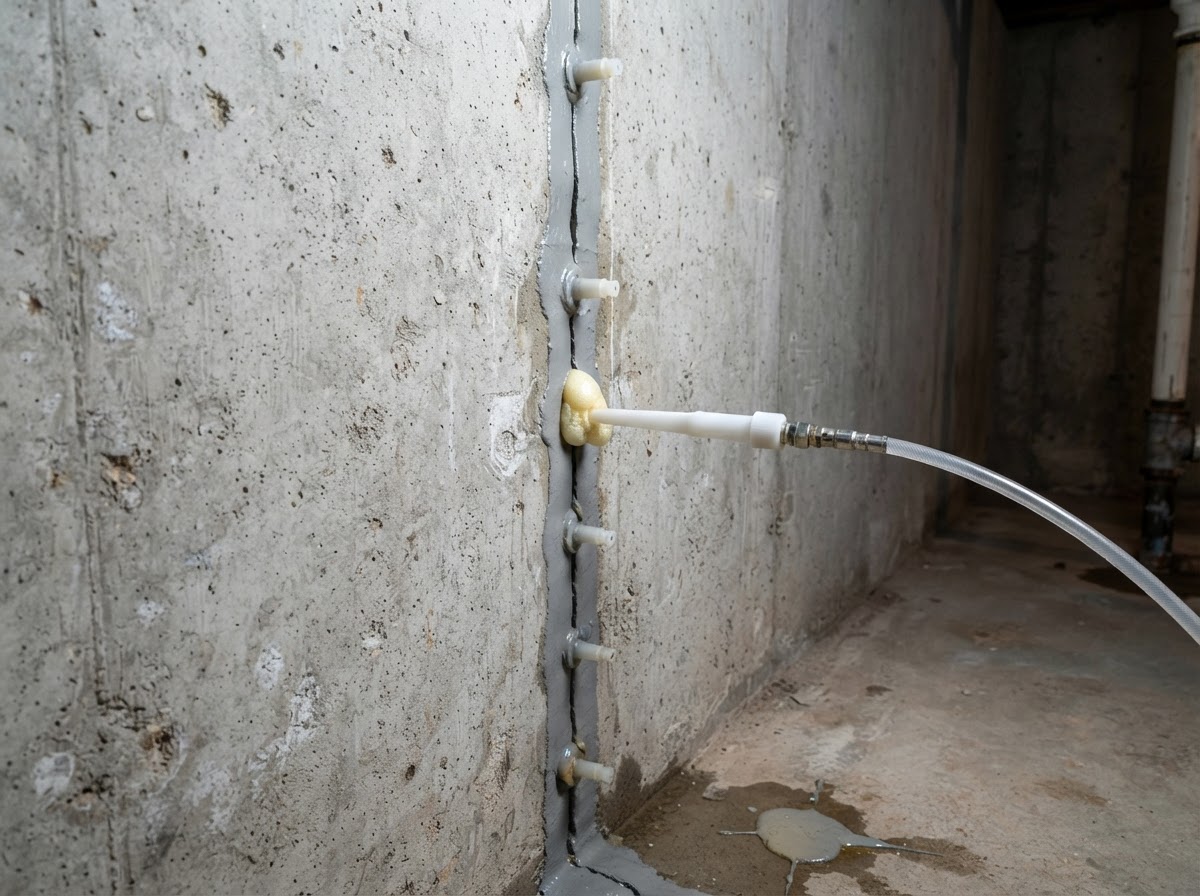
What foundation crack repair is and who needs it in Stamford
Foundation crack repair targets cracks in poured-concrete basement walls that let water seep into the basement. The repair seals the crack from the interior, so there is no excavation and minimal disruption to the basement or the yard. You may need it if you see a visible crack that is damp or actively leaking, water staining running down a wall, efflorescence (the white mineral residue left by evaporating water), or seepage during or after rain.
In Stamford's older housing stock, shrinkage cracks from the original pour and stress cracks from years of settlement are common, and Connecticut's freeze-thaw cycles widen them over time as water freezes and thaws in the concrete. A crack that was harmless for years can start leaking after a wet season or once the soil around the foundation becomes saturated. Repairing a leaking crack early prevents it from growing and protects finished basement walls, stored items, and the framing above.
Crack repair is the right answer when the crack itself is the source of water. When water is also entering through the wall-to-floor joint or rising under the slab, a crack repair alone won't solve the whole problem — those situations usually call for interior drainage or exterior waterproofing. We assess the full basement before recommending a scope so the repair matches the actual problem.
Water-seeping versus apparently dry cracks
Not every crack needs the same response. A crack that is actively leaking, has visible water staining, or shows efflorescence is clearly letting water in and is a candidate for injection. A crack that appears dry but runs through a wall that is otherwise sound may still be worth sealing preventively, especially if it is in an area that has seen water before or sits below grade where hydrostatic pressure builds during storms.
We look at where the crack sits on the wall, whether it widens from top to bottom or branches, and whether there are signs of past water at the base. A crack near a basement window, a pipe penetration, or a corner — where stress concentrates — gets particular attention. The assessment determines whether the crack is the water source or a symptom of something larger, and we explain what we find before recommending a repair.
We look at where the crack sits on the wall, whether it widens from top to bottom or branches, and whether there are signs of past water at the base. A crack near a basement window, a pipe penetration, or a corner — where stress concentrates — gets particular attention. The assessment determines whether the crack is the water source or a symptom of something larger, and we explain what we find before recommending a repair.
Crack location, movement, and previous repairs
Where a crack is and how it behaves over time changes the repair. A vertical or diagonal crack in a poured wall is common and often non-structural; a horizontal crack, a crack that is widening, or one that offsets across the wall can indicate ongoing movement that injection alone won't address. We look for signs that a crack is still moving — fresh spalling, changing width, or a step pattern — and we tell you plainly when that points toward a structural review rather than a simple seal.
Previous repairs also matter. A crack that has been patched with hydraulic cement, caulk, or a prior injection may have residue or failed material that has to be removed before a new injection can bond. We inspect what is already there and factor the prep into the scope and estimate. A repair over a failed patch without proper prep rarely holds, so we don't skip that step.
Previous repairs also matter. A crack that has been patched with hydraulic cement, caulk, or a prior injection may have residue or failed material that has to be removed before a new injection can bond. We inspect what is already there and factor the prep into the scope and estimate. A repair over a failed patch without proper prep rarely holds, so we don't skip that step.
When a structural assessment is needed
Most leaking cracks in poured-concrete walls are non-structural and can be sealed with injection. But some cracks warrant a structural engineer's review before any waterproofing work — wide cracks, horizontal cracks, cracks with visible offset across the wall, or cracks accompanied by bowing or step patterns in the block. In those cases, sealing the water path is only part of the answer; the movement itself needs to be evaluated.
We flag those cracks honestly during the assessment rather than injecting over a structural concern. If a crack needs an engineer's sign-off, we say so and explain what that process looks like, so you are not paying for a repair that masks a larger issue. The goal is a basement that stays dry because the underlying problem was understood, not one that looks fixed until the next storm.
We flag those cracks honestly during the assessment rather than injecting over a structural concern. If a crack needs an engineer's sign-off, we say so and explain what that process looks like, so you are not paying for a repair that masks a larger issue. The goal is a basement that stays dry because the underlying problem was understood, not one that looks fixed until the next storm.
Epoxy versus polyurethane as options a qualified contractor may evaluate
The two materials used for crack injection behave differently, and the choice depends on the crack. Polyurethane foam expands to fill the crack and stays flexible, which makes it well suited to non-structural leaking cracks that may see minor movement — it flexes with the wall instead of cracking again. Epoxy bonds the concrete back together and is stronger but rigid, which suits structural cracks where restoring continuity matters more than flexibility.
We assess the crack type and recommend the material that fits it, and we explain why before we start. For a typical non-structural leaking crack in a Stamford basement, polyurethane injection is often the right call; for a structural crack that an engineer has cleared for repair, epoxy may be the better choice. The written estimate specifies which material we recommend and why.
We assess the crack type and recommend the material that fits it, and we explain why before we start. For a typical non-structural leaking crack in a Stamford basement, polyurethane injection is often the right call; for a structural crack that an engineer has cleared for repair, epoxy may be the better choice. The written estimate specifies which material we recommend and why.
Interior access and finished-wall implications
Crack injection is done from the inside, so interior access is part of the job. If the basement is unfinished and the wall is exposed, the repair is straightforward. If the wall is finished with studs and drywall, we may need to open a small section to reach the crack — and we discuss that with you before starting so there are no surprises about the finished space.
We plan the access to be as minimal as practical and explain what will need to be opened and what you'll want to restore afterward. Where a finished wall makes interior access impractical, an exterior approach may be worth weighing instead, and we lay out that trade-off honestly. The assessment covers both the crack and the access path so the scope reflects what the job actually involves.
We plan the access to be as minimal as practical and explain what will need to be opened and what you'll want to restore afterward. Where a finished wall makes interior access impractical, an exterior approach may be worth weighing instead, and we lay out that trade-off honestly. The assessment covers both the crack and the access path so the scope reflects what the job actually involves.
What to expect and limitations
Most crack injections are completed in a single visit with minimal disruption to the basement. The repair stops water entering through the treated crack, but it does not address water rising under the floor or seeping through other areas — those may need interior drainage or exterior waterproofing. We tell you honestly when a crack is the only source of water and when a broader system makes more sense, and we never oversell a larger job than you need.
A properly injected crack should stop leaking at the treated location. If water appears elsewhere after the repair, that usually points to a second entry path the crack wasn't part of — and we can assess that follow-up rather than assuming the injection failed. The written estimate covers the crack we are repairing and is clear about what is and isn't included.
A properly injected crack should stop leaking at the treated location. If water appears elsewhere after the repair, that usually points to a second entry path the crack wasn't part of — and we can assess that follow-up rather than assuming the injection failed. The written estimate covers the crack we are repairing and is clear about what is and isn't included.
Service area
We repair foundation cracks in Stamford and nearby Fairfield County towns. Request an assessment with your service address and we'll inspect the crack and recommend the right repair for your home — with a written estimate and no obligation.
Ready to stop the water?
Tell us about your basement or crawl space and the symptoms you're seeing. We'll recommend the right scope and provide a written estimate after an on-site assessment — no obligation.
- • Free on-site assessment
- • Clear, written estimate
- • Local Stamford crew
Foundation Crack Repair questions, answered
Common questions homeowners in Stamford, CT ask about foundation crack repair.
Hiring & process
Pricing
Assessment & materials
Service area & next steps
Get your assessment
Request a visit and we'll inspect your basement or crawl space, identify where water is entering, and recommend the right foundation crack repair scope for your home.
Related services
- Crawl Space Encapsulation
- Sump Pump Installation
- Interior Drainage Systems
- Exterior Basement Waterproofing
Not sure which service you need? See all services or contact us.