Stamford, CT
Crawl Space Encapsulation
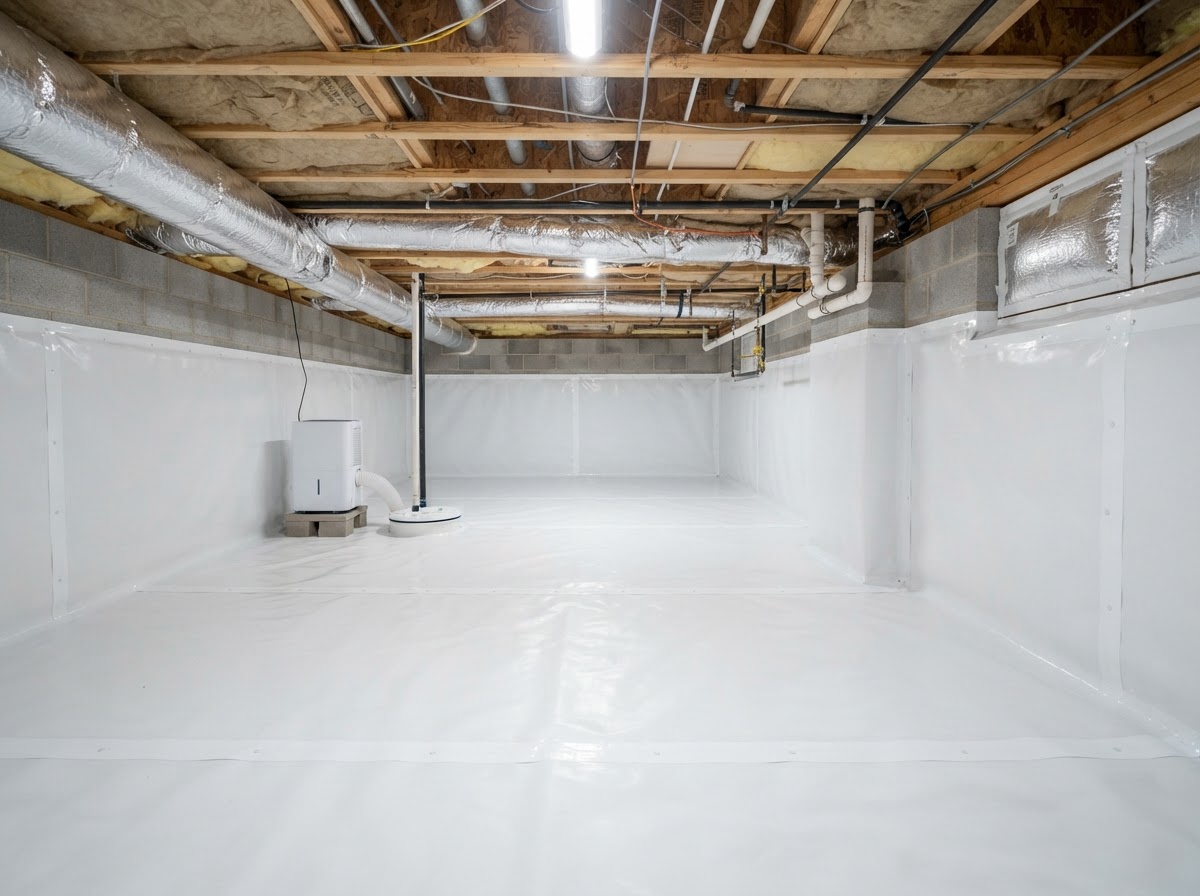
Crawl space encapsulation seals a dirt or vented crawl space with a heavy vapor barrier across the ground and up the walls, plus sealed vents and a dehumidifier. In Stamford, CT's humid climate, that controls the moisture that causes musty odors, soft floors, and poor indoor air — improving comfort throughout the whole home. We diagnose the moisture source first, then scope an encapsulation system that fits your crawl space.
203-779-6579 Serving Stamford, CT
What crawl space encapsulation is and who needs it in Stamford
Encapsulation seals the crawl space from ground moisture and humid outside air. A reinforced vapor barrier is laid across the dirt or floor and sealed up the foundation walls, vents and access doors are sealed, and a dehumidifier controls the remaining humidity. You may need it if your home has a dirt or vented crawl space and you notice musty odors, high indoor humidity, soft or sagging floors, condensation on ductwork, or pest activity.
Moisture in a crawl space can move between the crawl space and the occupied rooms above, so sealing it can improve air quality and comfort for homes in the Stamford area. In Connecticut's humid summers, a vented crawl space pulls in warm, moist air that condenses on cool surfaces; in winter, cold air under the floor makes the rooms above harder to heat. Encapsulation addresses both by closing the space to the outside and conditioning the air within it.
Encapsulation is the right answer when the crawl space is the source of moisture and comfort problems. When standing water is actively entering, that has to be addressed first — a vapor barrier over pooled water doesn't solve the problem. We diagnose the moisture source before recommending a scope so the encapsulation does its job.
Moisture source diagnosis before encapsulation
Before sealing a crawl space, we figure out where the moisture is coming from. The common sources are ground moisture evaporating from bare dirt, humid outside air entering through open vents, and bulk water entering through a foundation wall, a crack, or poor exterior drainage. Each calls for a different part of the fix: a vapor barrier for ground moisture, sealed vents for air, and drainage or crack repair for bulk water.
We inspect the crawl space for standing water, staining, and the condition of any existing barrier, and we look at the exterior grade and downspout discharge where relevant. If water is pooling, we address drainage and a sump before sealing — sealing over an active leak traps moisture against the framing. The assessment determines which combination of drainage, sealing, and dehumidification your crawl space actually needs.
We inspect the crawl space for standing water, staining, and the condition of any existing barrier, and we look at the exterior grade and downspout discharge where relevant. If water is pooling, we address drainage and a sump before sealing — sealing over an active leak traps moisture against the framing. The assessment determines which combination of drainage, sealing, and dehumidification your crawl space actually needs.
Ground vapor barrier as one system element
The vapor barrier is the core of an encapsulation system, but it is one element, not the whole job. We install a reinforced barrier sealed at the seams and up the foundation walls, with edges taped and sealed so moisture can't sneak past at the perimeter. The barrier grade matters — a thin sheet tears under foot traffic and against the wall; a reinforced liner holds up over the life of the space.
Where the crawl space has piers or obstructions, the barrier is detailed around them rather than left gapped, and access points are sealed with a door or cover so the space stays closed after the work is done. The barrier works with the sealed vents and the dehumidifier as a system, with the specific combination selected for your crawl space's actual conditions.
Where the crawl space has piers or obstructions, the barrier is detailed around them rather than left gapped, and access points are sealed with a door or cover so the space stays closed after the work is done. The barrier works with the sealed vents and the dehumidifier as a system, with the specific combination selected for your crawl space's actual conditions.
Drainage, ventilation, and humidity review
Sealing the vents changes the crawl space from a vented space to a conditioned one, so the humidity has to be actively managed. We review whether the space needs a dehumidifier, what capacity fits the square footage, and where it should drain — to a sump, a condensate pump, or a gravity line. A dehumidifier that is too small won't keep up in a Stamford summer; one that is right-sized runs efficiently and keeps the relative humidity in a range that discourages mold and pests.
Where bulk water is a risk, we also review whether drainage — a perimeter channel or a sump — belongs in the scope before the barrier goes down. Ventilation, in the old sense of open vents, is replaced by controlled conditioning; we explain that trade-off so you understand why the vents are being sealed rather than left open.
Where bulk water is a risk, we also review whether drainage — a perimeter channel or a sump — belongs in the scope before the barrier goes down. Ventilation, in the old sense of open vents, is replaced by controlled conditioning; we explain that trade-off so you understand why the vents are being sealed rather than left open.
Access and insulation condition
Encapsulation changes how you access and maintain the crawl space, so we look at the access opening and the insulation before we start. A tight or damaged access door gets a sealed replacement so the space stays closed; insulation on the walls or floor above is reviewed for condition, because wet or fallen insulation has to be removed and replaced as part of the job.
In a sealed, conditioned crawl space, wall insulation often replaces the older fiberglass batts between the floor joists, which can hold moisture against the framing. We assess what is there and recommend the right approach for your space, and we explain how you'll get in for maintenance after the encapsulation is complete. The goal is a space you can still service, not one that's sealed shut.
In a sealed, conditioned crawl space, wall insulation often replaces the older fiberglass batts between the floor joists, which can hold moisture against the framing. We assess what is there and recommend the right approach for your space, and we explain how you'll get in for maintenance after the encapsulation is complete. The goal is a space you can still service, not one that's sealed shut.
Maintenance and monitoring planning
A sealed crawl space still needs oversight. We walk you through what to check — the dehumidifier filter and drain, the condition of the barrier, and the humidity reading — and how often. A dehumidifier with a monitor or a hygrometer in the space lets you confirm the relative humidity is staying in range, so you catch a problem before it becomes mold or wood decay.
We are straightforward about which upkeep you can handle and which benefits from a service visit, and we explain what ongoing humidity control costs to run so there are no surprises on the utility bill. The aim is a crawl space that stays dry and usable year after year, not one that works for a season and then quietly fails.
We are straightforward about which upkeep you can handle and which benefits from a service visit, and we explain what ongoing humidity control costs to run so there are no surprises on the utility bill. The aim is a crawl space that stays dry and usable year after year, not one that works for a season and then quietly fails.
What to expect and limitations
Encapsulation reduces humidity, odors, and the conditions that attract pests and mold, and it helps protect wood framing from moisture damage. It does not stop water that is actively pooling without drainage, and a sealed space still needs ongoing humidity control — a dehumidifier that is too small won't keep up. We size the equipment and explain the maintenance to expect so the space stays dry.
Encapsulation also doesn't fix a structural issue in the crawl space; if the framing is compromised, that needs its own assessment. We tell you plainly when the moisture problem points to a drainage or structural scope before encapsulation, and we don't seal over a problem that sealing won't solve.
Encapsulation also doesn't fix a structural issue in the crawl space; if the framing is compromised, that needs its own assessment. We tell you plainly when the moisture problem points to a drainage or structural scope before encapsulation, and we don't seal over a problem that sealing won't solve.
Service area
We encapsulate crawl spaces in Stamford and nearby Fairfield County towns. Request an assessment and we'll inspect your crawl space, diagnose the moisture source, and recommend the right scope — with a written estimate and no obligation.
Ready to stop the water?
Tell us about your basement or crawl space and the symptoms you're seeing. We'll recommend the right scope and provide a written estimate after an on-site assessment — no obligation.
- • Free on-site assessment
- • Clear, written estimate
- • Local Stamford crew
Crawl Space Encapsulation questions, answered
Common questions homeowners in Stamford, CT ask about crawl space encapsulation.
Hiring & process
Pricing
Monitoring & maintenance
Service area & next steps
Get your assessment
Request a visit and we'll inspect your basement or crawl space, identify where water is entering, and recommend the right crawl space encapsulation scope for your home.
Related services
- Foundation Crack Repair
- Sump Pump Installation
- Interior Drainage Systems
- Exterior Basement Waterproofing
Not sure which service you need? See all services or contact us.